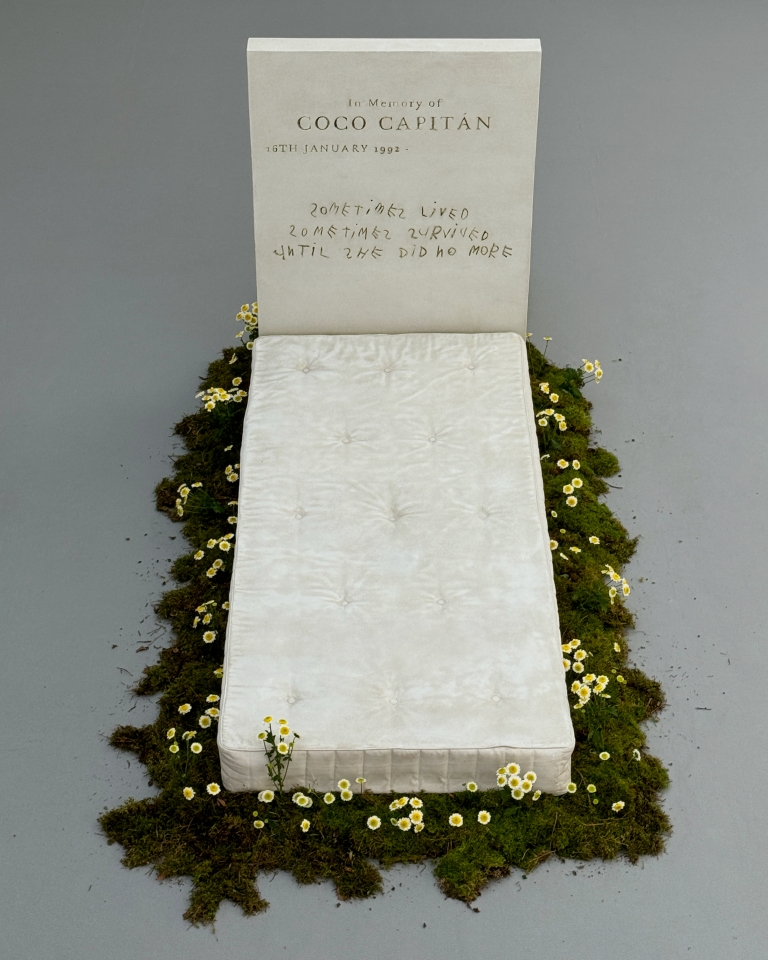
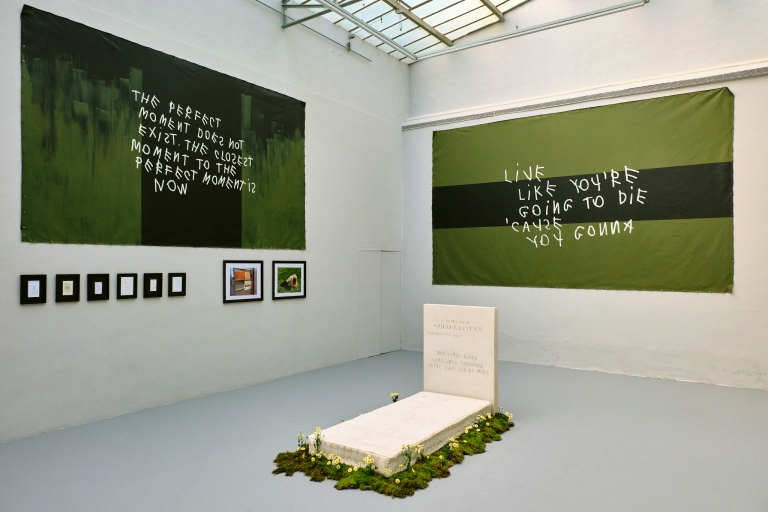
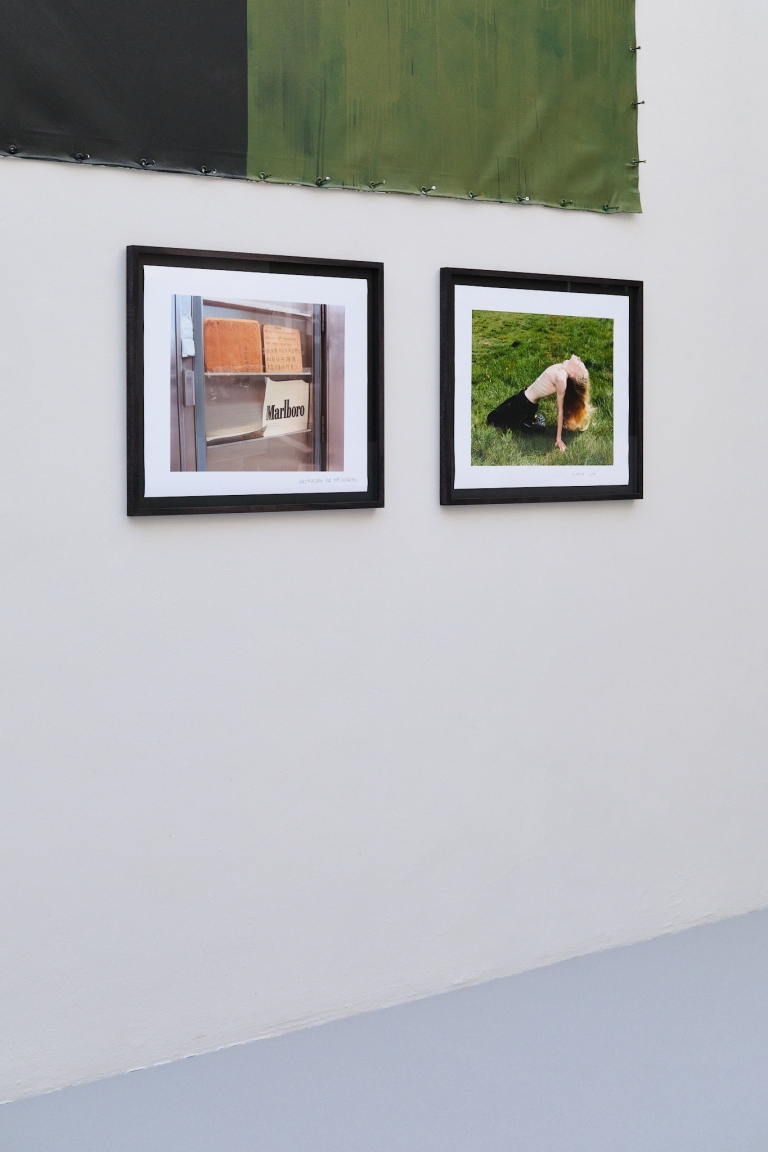
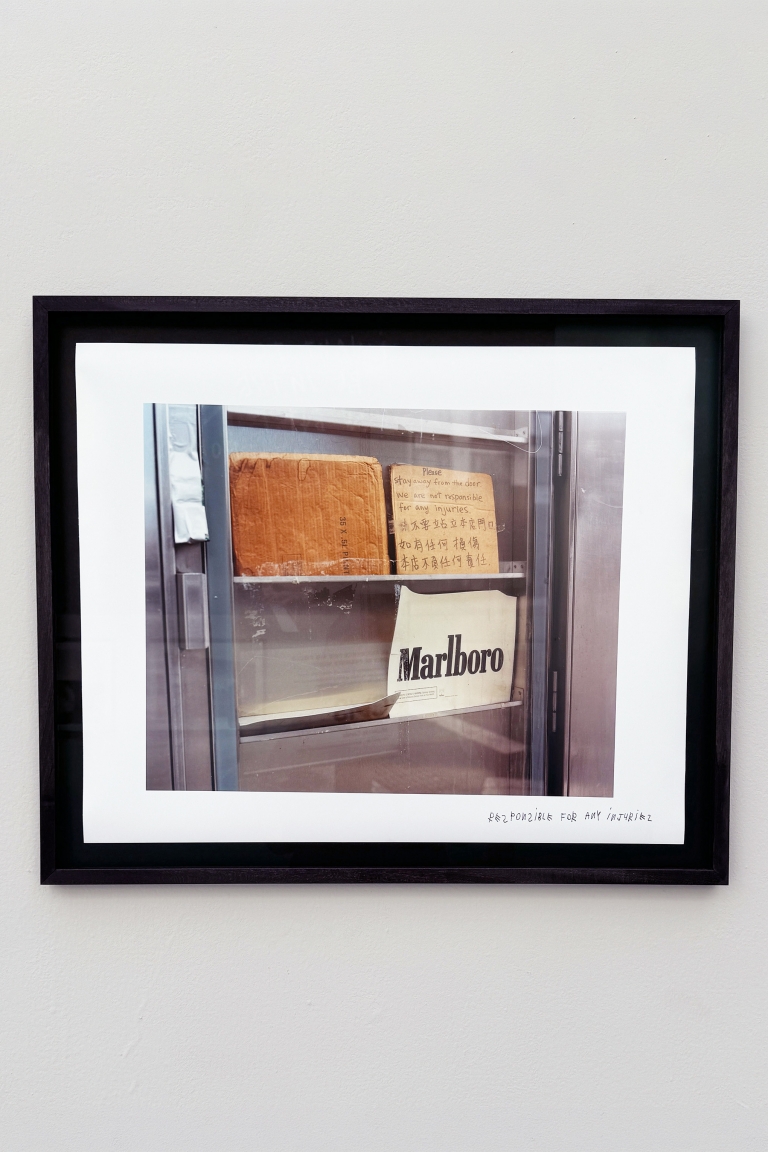
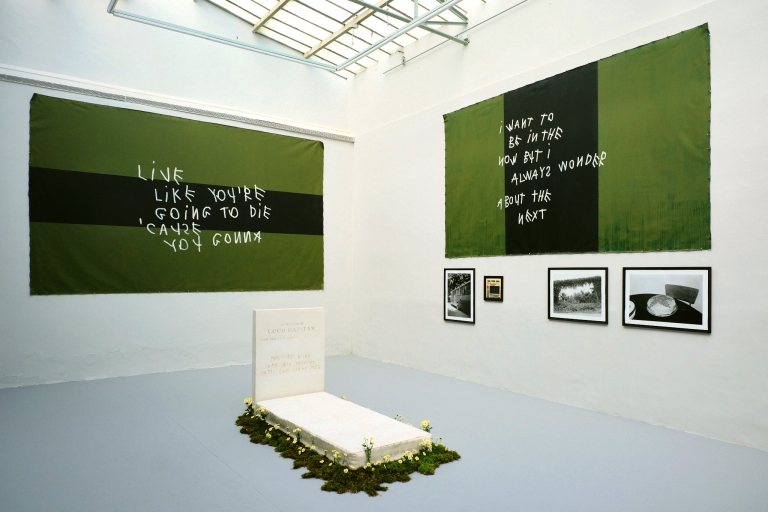
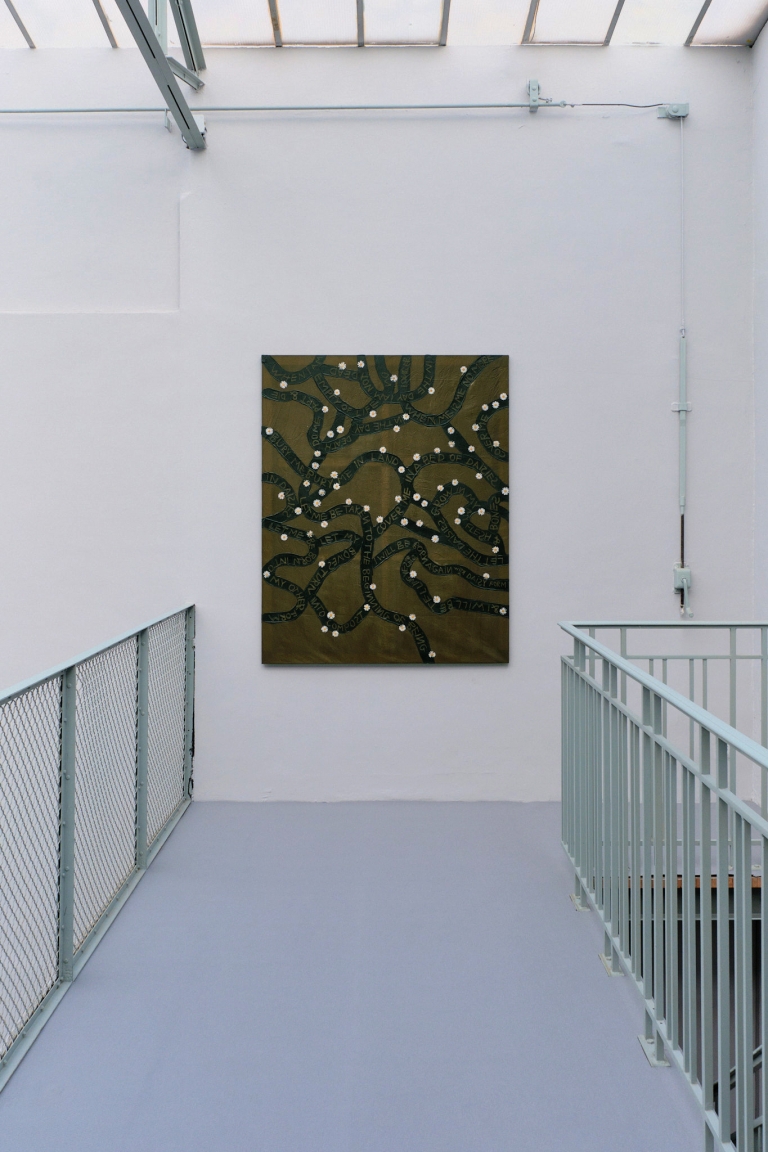
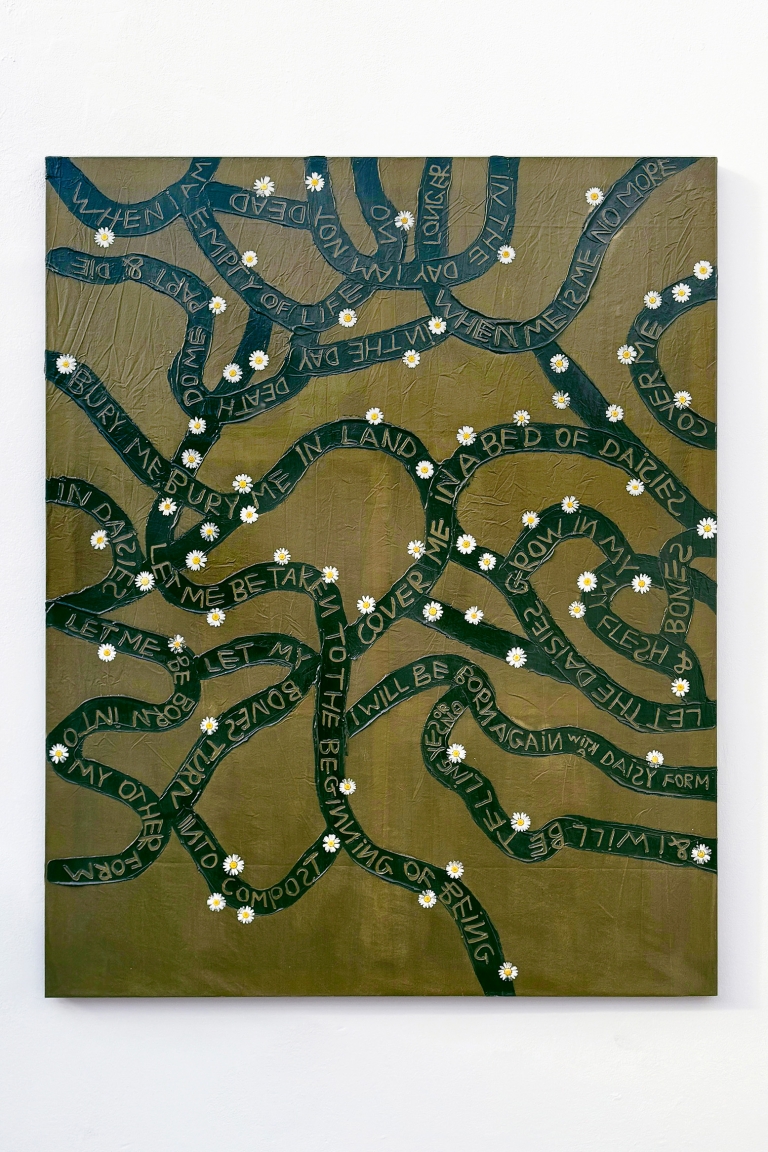
Memento Mori explores the transient nature of life, drawing on the ancient reminder of death's inevitability to reframe mortality not as a source of fear but as a motivator — a force that sharpens awareness of life's fragility and value, and pushes toward a more mindful, present way of living. At its centre is a sculptural work depicting the artist's own tombstone, reimagined as a mattress: an object of eternal rest built, in Capitán's words, to free herself from fear by keeping her own end present. Alongside it, a series of black-and-white gelatin silver prints and colour c-types, all hand-printed by the artist, capture miscellaneous scenes — a birthday cake, a bus in an unlikely landscape — as moments suspended in time. These images sit with a collection of quotes, some at billboard scale, others scribbled on scraps of paper, which Capitán refers to as "memorabilia": fragments of personal memory she wishes to preserve. The work reflects on a generation she feels has lost touch with its own mortality, chasing achievement and consumption under the illusion of endless time, and argues instead for attention to the small, fleeting particulars of being alive — the fall of light through trees, the words of a friend, the satisfaction of a finished print — as what will ultimately hold meaning.
Memento Mori
Villa Noailles, Hyeres, 2024